Overview
Laboratory hoods are essential instruments in modern laboratories, serving as protective enclosures that safeguard both experimental samples and the researchers handling them. These instruments create a controlled environment that minimizes contamination risks, protects against hazardous substances, and ensures a sterile workspace when necessary. The term “hood” encompasses a variety of units, including laminar flow benches, fume hoods, tissue culture hoods, and biosafety cabinets, each designed for specific laboratory tasks and levels of protection.
At their core, all hoods operate on the principle of laminar airflow, which involves a steady, streamlined flow of air in parallel layers. Laminar flow prevents turbulence that could carry contaminants to samples or allow hazardous fumes to escape into the laboratory. By maintaining controlled airflow patterns, laboratory hoods protect the integrity of experiments while reducing risk to researchers.
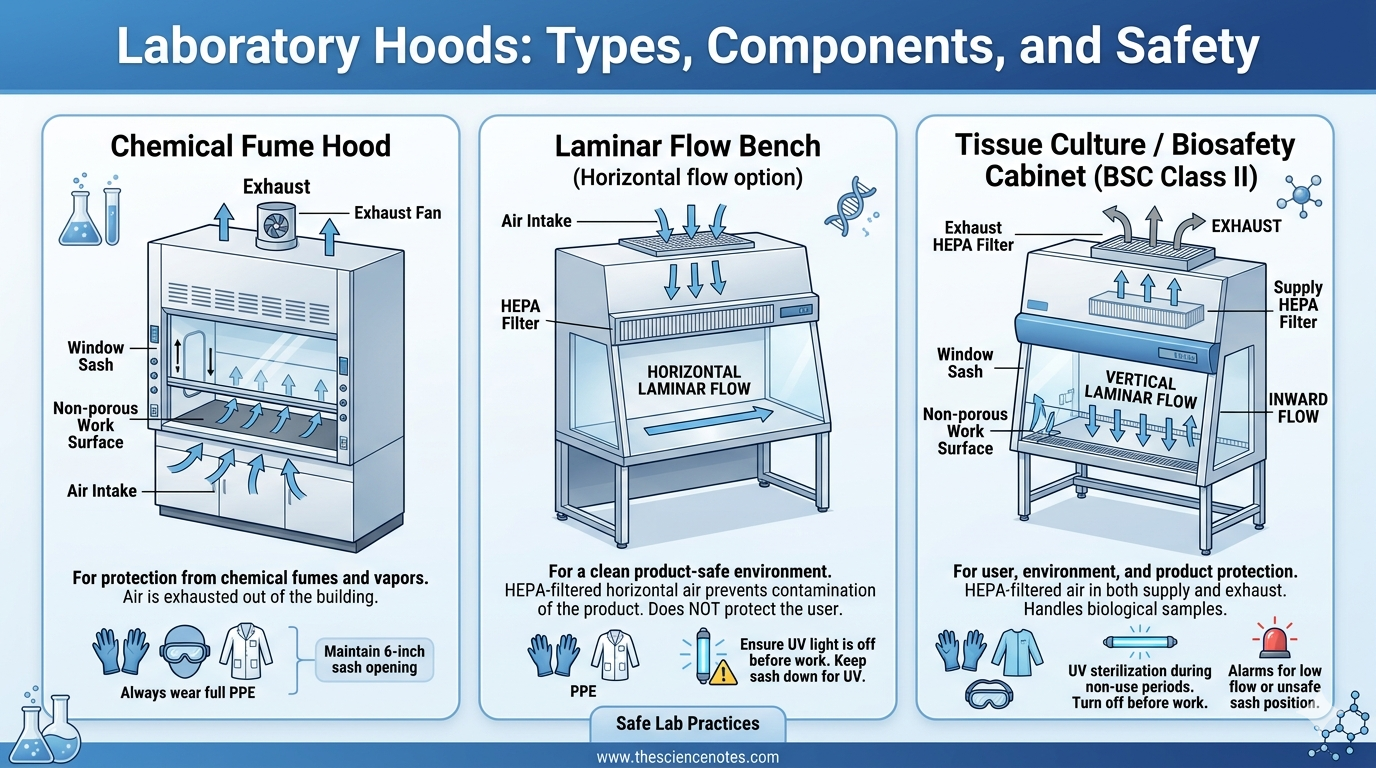
Choosing the appropriate type of hood depends on the nature of the experiment. Fume hoods are designed primarily for user safety, containing toxic or noxious chemical fumes, but do not protect the experimental materials. In contrast, laminar flow benches prioritize protection of experimental samples, making them ideal for sterile procedures that involve non-hazardous materials. When both researcher and experiment require protection—such as during tissue culture or experiments involving infectious agents—biosafety cabinets or tissue culture hoods are necessary. These specialized hoods combine airflow management with high-efficiency particulate filtration to maintain sterility and protect against biohazards.
Proper hood usage also requires adherence to laboratory safety protocols, including the use of personal protective equipment (PPE), careful planning of experimental setup, and understanding the airflow dynamics of the unit. This article provides a comprehensive guide to the types, components, operation, and applications of laboratory hoods, ensuring safe and effective laboratory practice.
Principles of Laminar Flow
The laminar flow principle is the cornerstone of hood functionality. In laminar flow, air moves in uniform, parallel layers, reducing turbulence and the potential for cross-contamination. This is critical for procedures where sterility must be maintained, such as tissue culture, cell handling, or microbiology experiments.
Hoods can utilize either horizontal laminar flow or vertical laminar flow:
Horizontal flow hoods: Air is filtered and directed horizontally from the back of the unit toward the front. This configuration protects the sample from contaminants but does not offer protection for the user from hazardous materials. Horizontal flow hoods are typically used for sterile procedures involving non-hazardous biological samples or cell cultures.
Vertical flow hoods: Filtered air flows downward from the top of the hood, moving vertically past the work surface and out through a filtered exhaust. This arrangement maintains sample sterility while providing better containment for potential contaminants, making it suitable for tissue culture and low-risk BSL-1 experiments.
Laminar flow design ensures that airflow patterns are predictable and constant, minimizing the introduction of dust, particulates, or chemical vapors into the workspace. Proper understanding of laminar flow is essential for effective and safe hood operation.
Key Components of Laboratory Hoods
Despite variations in type and design, most laboratory hoods share common structural and functional components:
Window Sash / Protective Glass Barrier:
The sash is a sliding glass barrier that separates the user from the work area. It provides a physical shield against splashes, aerosols, and fumes. Depending on the hood type, the sash can be horizontally or vertically oriented. Proper sash positioning is critical to maintaining optimal airflow and protecting both user and sample.Work Surface:
Hoods typically feature a non-porous, chemically resistant surface, such as stainless steel or epoxy resin. This surface allows easy cleaning and disinfection, reducing the risk of contamination.Air Intake and Exhaust:
Air enters the hood through a filtered intake, passes across the work surface, and exits through an exhaust system. The precise placement of intake and exhaust vents depends on the hood type and manufacturer specifications. HEPA filtration is often used in biosafety cabinets and tissue culture hoods to remove particulates and pathogens from incoming and outgoing air.Control Panel and Accessories:
Many hoods include a control panel for adjusting airflow, turning on work lights, and operating additional features like UV sterilization lamps. UV lights can disinfect surfaces when the hood is not in use, but must never be left on when personnel are present, as UV exposure can damage skin, eyes, and increase cancer risk.Alarms and Safety Indicators:
Modern hoods are equipped with alarms to signal improper sash height, airflow disruptions, or other safety concerns. These features help maintain consistent laminar flow and ensure the protection of both user and experiment.
Safe Operating Procedures in Laboratory Hoods
Personal Protective Equipment (PPE)
Before beginning work, ensure that you are wearing the appropriate PPE, including gloves, goggles, and laboratory coats. Respiratory protection may be required when working with hazardous chemicals or infectious materials.
Prepping the Hood
For sterile procedures, start by disinfecting the hood surface and all objects to be used within the hood with 70% ethanol. This quick-evaporating disinfectant eliminates surface contaminants without leaving residue.
Object Placement
Place items in the hood without obstructing airflow. Avoid blocking the rear vents and maintain at least 6 inches of clearance in front of the sash.
Spray each object with ethanol as it is introduced into the hood to maintain sterility.
Maintain the proper sash height according to the hood’s specifications. The hood alarm will alert you if the sash is not correctly positioned.
During the Experiment
Handle samples carefully to avoid disrupting airflow and generating turbulence.
Keep movements slow and deliberate, minimizing the risk of contamination.
Ensure that all waste and spills are managed within the hood to prevent contamination or exposure.
Post-Experiment
Remove all materials from the hood and disinfect the work surface.
Close the sash to conserve energy and maintain safety.
Turn off lights and other electrical features, unless specifically instructed to leave UV lights on for sterilization when the lab is unoccupied.
Types of Laboratory Hoods
1. Fume Hoods
Fume hoods are primarily designed to protect the researcher from toxic or noxious chemical fumes. While they effectively contain hazardous vapors, they do not maintain a sterile environment, making them unsuitable for experiments requiring aseptic conditions. Typical applications include:
Chemical fixation
Tissue processing
Histology techniques involving corrosive or toxic chemicals
Fume hoods are an essential safety tool for chemical handling but should never be used for biological sample protection.
2. Laminar Flow Benches
Laminar flow benches prioritize protection of experimental samples rather than the user. Airflow can be horizontal or vertical, depending on the model. These benches are ideal for:
BSL-1 cell culture experiments
Sample dissection where sterility is crucial
Non-hazardous work requiring contaminant-free environments
While effective at preventing contamination of the sample, laminar flow benches do not protect the user from chemical or biological hazards.
3. Tissue Culture Hoods / Biosafety Cabinets
These units offer dual protection—they maintain sterility of the experimental workspace while safeguarding the user from potential biohazards. Tissue culture hoods are equipped with HEPA filtration systems that remove airborne particulates from both incoming and outgoing air. Common applications include:
Mammalian or bacterial cell culture
Handling of low- to moderate-risk infectious agents
Procedures requiring vacuum aspiration of cell culture media
Biosafety cabinets vary in classification (BSL-1 to BSL-3), so always check the hood’s rating before beginning experiments involving infectious materials.
Laboratory Applications of Hoods
Hoods are versatile instruments that support a wide range of laboratory procedures, including:
Sterile cell culture: Tissue culture hoods prevent contamination and maintain controlled conditions for cell growth.
Aseptic dissections: Laminar flow benches protect sensitive tissues during experimental manipulations.
Chemical handling: Fume hoods safely contain toxic fumes during chemical processing and fixation.
Microbiological experiments: Biosafety cabinets protect both the user and the environment during pathogen handling.
Glassware and instrument sterilization: UV-equipped hoods can sterilize small equipment surfaces between experiments.
By selecting the appropriate hood type and adhering to operational guidelines, researchers can safely conduct complex experiments without compromising the integrity of samples or personal safety.
Conclusion
Laboratory hoods are indispensable tools that combine airflow management, filtration, and protective barriers to create safe, sterile environments for scientific research. Understanding the principle of laminar flow, the components of each hood type, and the proper operating procedures ensures that experiments can be conducted effectively and safely.
From fume hoods that protect researchers from chemical hazards to biosafety cabinets that provide dual protection for user and experiment, choosing the correct hood is a critical step in experimental planning. Coupled with the correct use of PPE, disinfectants, and proper airflow management, hoods maintain safety, reduce contamination risks, and facilitate accurate, reproducible scientific work.
Always remember: correct sash positioning, mindful placement of materials, and awareness of airflow are essential to maximize hood effectiveness. Following these best practices ensures both your safety and the integrity of your experimental outcomes.
