
Echinococcosis: Life Cycle, Symptoms, and Management
Echinococcosis is a parasitic disease caused by infection with tiny tapeworms of the genus Echinococcus. Humans are accidental hosts, contracting the disease through ingestion of... Read more
Complex Science, Simplified.
Echinococcosis is a parasitic disease caused by infection with tiny tapeworms of the genus Echinococcus. Humans are accidental hosts, contracting the disease through ingestion of... Read more

Trichuriasis, commonly known as whipworm infection, is caused by a parasitic nematode scientifically known as Trichuris trichiura. This infection is one of several categorized as... Read more
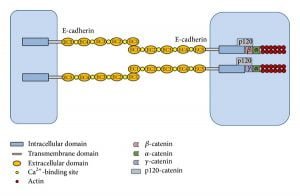
Author: Binod GC E-cadherin is a type-1 cadherin which is considered as an ideal of all cadherin in normal as well as in aberrant conditions.... Read more

Author : Binod G C E-cadherin is one of the members of cadherin superfamily. Classical cadherins are transmembrane glycoproteins that mediate cell-cell adhesion in a... Read more

There are three major steps in a PCR, which are repeated for 20-35 cycles. 1. Denaturation at 94°C :During the denaturation, the double strand melts... Read more
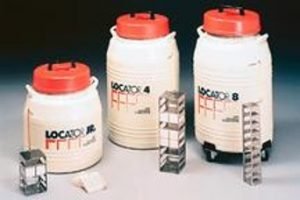
a. Harvest cells as usual (and wash once with complete medium). b. Resuspend cells in complete medium and determine cell count/viability. Keep cells on ice. ... Read more
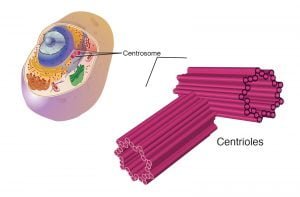
Centriole is a barrel shaped structure found in the area of centrosomes. Centrioles are physically made up of microtubules. The centrioles are in average 200nm... Read more

LUCIFERASE ASSAY Harvesting the cell (adherent cells) Remove the culture medium 1ml of PBS is added to each well. Scrape out the cells and transfer... Read more
Open the cell culture hood, turn on the light and the blower. Make sure to clean the hood and wipe it with 70% ethanol before... Read more

Example of Gene Regulation at steps after Transcription initiation. Where translation is coupled with transcription to achieve regulation of an operon through secondary RNA structure.... Read more