The nucleus is a membrane-bound organelle that stores DNA and controls gene expression in eukaryotic cells. Learn its structure, nucleolus, chromatin, chromosomes, nuclear pores, and functions.
Table of Contents
ToggleWhat is the Nucleus?
The nucleus is a membrane-bound organelle found in eukaryotic cells. It contains the cell’s hereditary material, mainly in the form of chromosomal DNA, and acts as the main control center of the cell.
The nucleus controls many important cellular activities by regulating gene expression. Gene expression determines which proteins are produced, when they are produced, and in what amounts. Since proteins carry out most structural and functional activities in a cell, the nucleus indirectly controls cell growth, metabolism, differentiation, division, and reproduction.
The nucleus is one of the most prominent organelles in many eukaryotic cells. It is separated from the cytoplasm by a double membrane called the nuclear envelope or nuclear membrane. This envelope contains specialized openings called nuclear pore complexes, which regulate the movement of molecules between the nucleus and cytoplasm.
Although the nucleus contains most of the cell’s DNA, it is not the only place where DNA can be found in eukaryotic cells. Mitochondria and, in plant cells, chloroplasts also contain small amounts of DNA. However, mitochondrial and chloroplast DNA mainly control functions specific to those organelles, while nuclear DNA controls most cellular activities.
Nucleus Definition
The nucleus is a double membrane-bound organelle that contains DNA and regulates the major activities of a eukaryotic cell.
It is responsible for storing genetic information, regulating gene expression, coordinating protein synthesis, controlling cell division, and maintaining hereditary continuity from one generation of cells to the next.
In simple terms, the nucleus stores the cell’s genetic instructions and controls how those instructions are used.
Location of the Nucleus
The nucleus is located inside the cytoplasm of eukaryotic cells. In many animal cells, it is positioned near the center of the cell. However, its exact location can vary depending on the type and function of the cell.
For example, in plant cells, the large central vacuole may push the nucleus toward the side of the cell. In skeletal muscle cells, several nuclei may be present along the length of the muscle fiber.
The nucleus is found in:
| Organism or Cell Type | Nuclear Condition |
|---|---|
| Animal cells | Usually one nucleus |
| Plant cells | Usually one nucleus |
| Fungal cells | One or more nuclei |
| Protists | One or more nuclei |
| Mature mammalian red blood cells | No nucleus |
| Skeletal muscle fibers | Multiple nuclei |
| Slime molds | Often multinucleate |
Structure of the Nucleus
The nucleus contains several important structural components that work together to protect, organize, and express genetic information.
The major parts of the nucleus include:
| Part of Nucleus | Main Role |
|---|---|
| Nuclear envelope | Separates nucleus from cytoplasm |
| Nuclear pores | Regulate exchange of materials |
| Nucleoplasm | Gel-like fluid inside the nucleus |
| Chromatin | DNA-protein complex involved in gene regulation |
| Chromosomes | Condensed DNA structures during cell division |
| Nucleolus | Produces rRNA and assembles ribosomal subunits |
| Nuclear bodies | Organize specific nuclear reactions |
Nuclear Envelope or Nuclear Membrane
The nuclear envelope, also called the nuclear membrane, is a double membrane that surrounds the nucleus. It separates the nucleoplasm from the cytoplasm and protects the genetic material inside the nucleus.
The nuclear envelope consists of:
- Outer nuclear membrane
- Inner nuclear membrane
- Perinuclear space between the two membranes
- Nuclear pore complexes that regulate transport
The outer nuclear membrane is often continuous with the endoplasmic reticulum, especially the rough endoplasmic reticulum. Like the plasma membrane, the nuclear envelope is mainly made of phospholipids and proteins.
Functions of the Nuclear Envelope
The nuclear envelope:
- Protects DNA from cytoplasmic enzymes and chemical reactions
- Maintains the shape and organization of the nucleus
- Separates transcription in the nucleus from translation in the cytoplasm
- Controls movement of molecules between the nucleus and cytoplasm
- Supports the organization of chromatin inside the nucleus
Nuclear Pore Complexes
The nuclear envelope is lined with many nuclear pore complexes, commonly called NPCs. These are protein-lined channels that control the exchange of materials between the nucleoplasm and cytoplasm.
Nuclear pore complexes are not simple openings. They are highly organized protein structures that selectively regulate what enters and leaves the nucleus.
Materials Transported Through Nuclear Pores
Nuclear pores help transport:
- Messenger RNA
- Ribosomal RNA
- Transfer RNA
- Ribosomal subunits
- Proteins
- Enzymes
- Ions
- Nucleotides
- Regulatory molecules
For example, messenger RNA made inside the nucleus must pass through nuclear pores before it reaches ribosomes in the cytoplasm for protein synthesis. Similarly, many proteins made in the cytoplasm must enter the nucleus to help with DNA replication, transcription, or gene regulation.
Nucleoplasm
The nucleoplasm is the gel-like fluid present inside the nucleus. It is also called karyoplasm.
It surrounds the chromatin, nucleolus, and other nuclear bodies. The nucleoplasm contains water, dissolved ions, enzymes, nucleotides, proteins, and other molecules required for nuclear activities.
Functions of Nucleoplasm
The nucleoplasm:
- Suspends chromatin and nuclear bodies
- Provides a medium for DNA replication and transcription
- Helps maintain nuclear shape
- Allows movement of enzymes, nucleotides, and regulatory proteins
- Protects and supports nuclear components
Many important nuclear processes, including DNA replication, RNA synthesis, and gene regulation, occur within the nucleoplasm.
Arrangement of DNA within the Nucleus
The arrangement of DNA inside the nucleus is highly organized and changes according to the cell cycle.
The DNA in the nucleus is not randomly placed. It is packed with proteins called histones to form a DNA-protein complex known as chromatin.
This arrangement helps the cell solve two major problems:
- Packaging problem: DNA is very long and must fit inside a tiny nucleus.
- Access problem: DNA must remain accessible for replication, transcription, and repair.
The structure of chromatin directly affects gene expression. Loosely packed chromatin is easier for enzymes to access, while tightly packed chromatin is usually less active.
Chromatin and Chromosomes
DNA inside the nucleus exists in different forms depending on the stage of the cell cycle.
Chromatin During Interphase
When a cell is not dividing, it is usually in interphase. During this stage, DNA is present as loosely arranged chromatin fibers.
This loose arrangement allows easier access to DNA by:
- DNA replication enzymes
- Transcription enzymes
- DNA repair proteins
- Gene-regulating proteins
Because chromatin is more open during interphase, the cell can actively read genes and produce RNA molecules.
Chromosomes During Cell Division
When a cell prepares to divide, chromatin fibers condense tightly into distinct, visible structures called chromosomes.
This condensation is important because chromosomes can be moved and separated more accurately during cell division.
Chromosomes help ensure that each daughter cell receives the correct amount of genetic material.
Chromatin vs Chromosomes
| Feature | Chromatin | Chromosome |
|---|---|---|
| Form | Loose, thread-like DNA-protein complex | Condensed DNA structure |
| Seen During | Interphase | Cell division |
| Function | Allows gene expression and DNA replication | Allows accurate DNA separation |
| Visibility | Less visible under light microscope | Clearly visible during division |
| DNA Access | More accessible | Less accessible |
Histones and DNA Packaging
Histones are proteins that help package DNA inside the nucleus. DNA wraps around histone proteins to form structural units called nucleosomes.
Nucleosomes are often described as “beads on a string” because DNA wraps around histone cores at regular intervals.
This packaging allows DNA to be compacted while still remaining available for cellular processes when needed.
Importance of Histones
Histones help:
- Organize DNA inside the nucleus
- Compact DNA into chromatin
- Regulate access to genes
- Influence gene expression
- Support chromosome formation during cell division
Changes in histone arrangement can affect whether a gene is active or inactive.
Nucleolus and Nucleoli
The nucleolus is a dense, membrane-less region inside the nucleus. It is mainly involved in the production of ribosomes.
Some cells contain one nucleolus, while others may contain multiple nucleoli. The plural form of nucleolus is nucleoli.
The nucleolus forms around specific chromosomal regions that contain genes for ribosomal RNA, also called rRNA. These regions are known as nucleolar organizer regions.
Functions of the Nucleolus
The nucleolus:
- Synthesizes ribosomal RNA
- Processes rRNA molecules
- Combines rRNA with ribosomal proteins
- Assembles ribosomal subunits
- Exports ribosomal subunits to the cytoplasm
The ribosomal subunits made in the nucleolus leave the nucleus through nuclear pores. In the cytoplasm, these subunits join together to form functional ribosomes, which are required for protein translation.
Nucleolus During Cell Division
The nucleolus disappears during cell division when chromosomes condense. After cell division is complete, nucleoli reform in the daughter cells.
Additional Sub-Nuclear Structures
The nucleus contains several other structures known as nuclear bodies or sub-nuclear bodies. These are membrane-less compartments that help organize specific nuclear activities.
Examples include:
- Cajal bodies
- Nuclear speckles
- Paraspeckles
- PML bodies
- Gemini of coiled bodies
These structures are not true membrane-bound organelles. Instead, they are specialized regions within the nucleoplasm where particular molecules gather and specific biological reactions occur.
Functions of Nuclear Bodies
Nuclear bodies help:
- Organize the nuclear environment
- Create specialized sites for nuclear reactions
- Support RNA processing
- Assist in gene regulation
- Improve efficiency of molecular interactions
- Allow exchange of molecules with the surrounding nucleoplasm
Because they lack membranes, nuclear bodies can exchange materials rapidly with the nucleoplasm. This makes them useful for dynamic nuclear processes such as RNA processing and gene regulation.
Functions of the Nucleus
The nucleus performs many essential functions in eukaryotic cells.
1. Stores Genetic Information
The nucleus stores most of the cell’s DNA. DNA contains genes, which carry instructions for making proteins and regulating cellular activities.
2. Controls Gene Expression
The nucleus controls which genes are active and which genes are inactive. This regulation determines what proteins are produced in the cell.
Gene expression control is essential for:
- Cell specialization
- Growth
- Development
- Metabolism
- Response to signals
- Cell division
For example, a nerve cell and a muscle cell may contain the same DNA, but they express different genes. This difference in gene expression allows them to perform different functions.
3. Regulates Protein Production
The nucleus does not directly synthesize proteins. However, it controls protein production by producing messenger RNA from DNA.
Messenger RNA carries genetic instructions from the nucleus to ribosomes in the cytoplasm, where proteins are assembled.
4. Site of DNA Replication
Before cell division, the nucleus is the site where DNA replication occurs. DNA replication produces an identical copy of the genetic material so that each daughter cell receives a complete set of chromosomes.
5. Site of Transcription
Transcription is the process by which RNA is made from a DNA template. This occurs inside the nucleus.
The main RNA molecules produced include:
- Messenger RNA
- Ribosomal RNA
- Transfer RNA
- Small nuclear RNA
6. Separates Transcription from Translation
In eukaryotic cells, transcription occurs in the nucleus, while translation occurs in the cytoplasm.
This separation allows additional control over gene expression. RNA molecules can be processed, modified, and checked before they are used for protein synthesis.
7. Produces Ribosomal Subunits
The nucleolus produces rRNA and assembles ribosomal subunits. These subunits later move into the cytoplasm to form functional ribosomes.
8. Controls Cell Division
The nucleus controls the cell cycle by regulating DNA replication, chromosome condensation, and chromosome separation.
During cell division, chromatin condenses into chromosomes so that genetic material can be distributed accurately to daughter cells.
9. Maintains Genetic Integrity
The nucleus helps protect DNA and supports DNA repair mechanisms. This is important because damage to DNA can affect gene expression, cell function, and inheritance.
10. Regulates Molecular Transport
The nuclear pore complexes regulate the movement of molecules between the nucleus and cytoplasm. This selective transport ensures that only appropriate molecules enter or leave the nucleus.
Types of Cells Based on Number of Nuclei
Although most eukaryotic cells have one nucleus, some cells may have no nucleus or more than one nucleus.
1. Uninucleate Cells
Cells with one nucleus are called uninucleate cells. Most animal and plant cells are uninucleate.
2. Anucleate Cells
Cells without a nucleus are called anucleate cells. Mature mammalian red blood cells are anucleate. They lose their nucleus during development, which gives them more space to carry hemoglobin.
3. Multinucleate Cells
Cells with more than one nucleus are called multinucleate cells. Skeletal muscle fibers are multinucleate because they are formed by the fusion of many smaller cells. Their multiple nuclei help support their large size and high protein-production needs.
4. Coenocytic Cells
Some organisms, such as certain fungi and slime molds, may have many nuclei within a shared cytoplasm. This condition is called coenocytic.
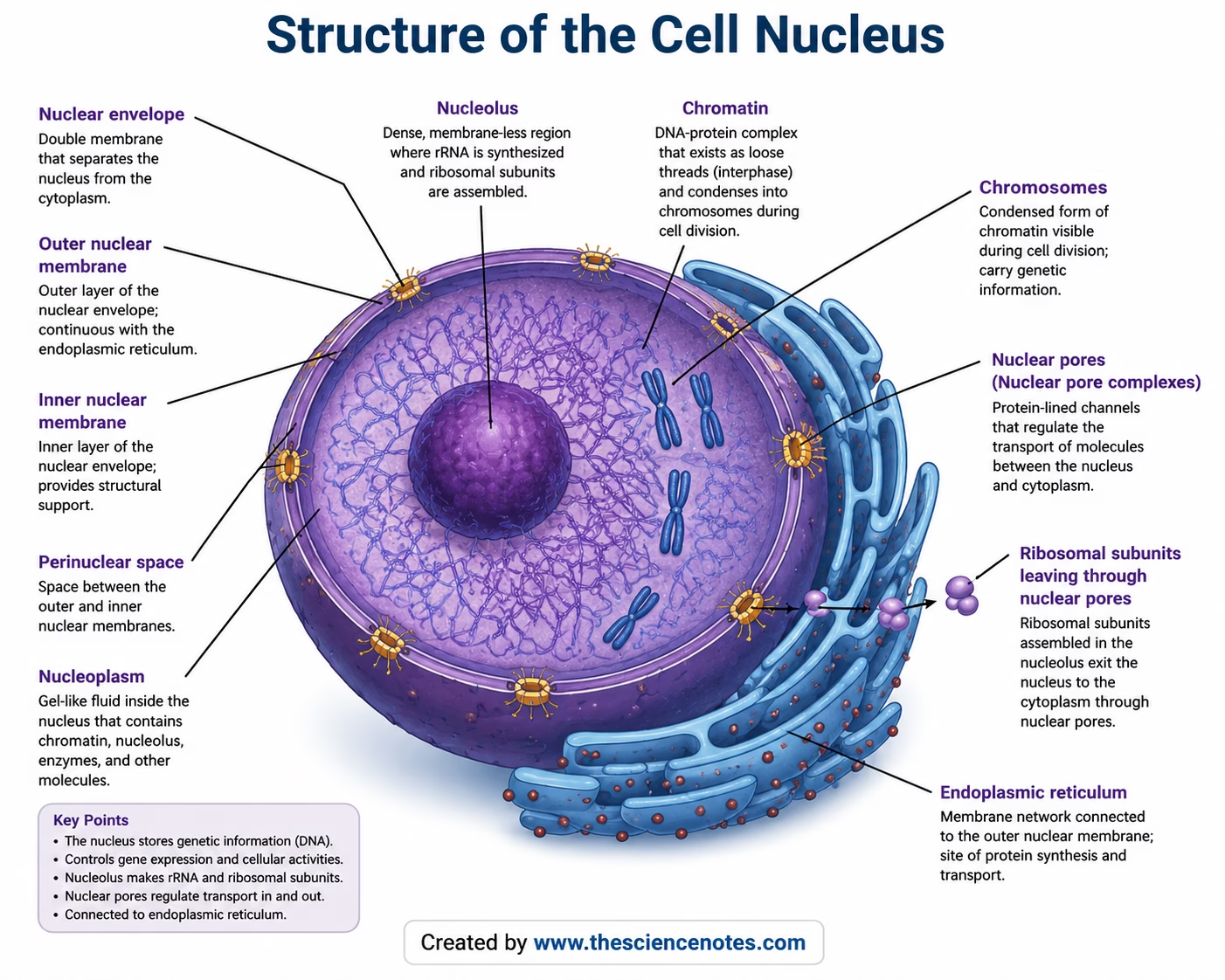
Nucleus Diagram Description
A labeled diagram of the nucleus should include the following parts:
- Nuclear envelope
- Outer nuclear membrane
- Inner nuclear membrane
- Nuclear pores or nuclear pore complexes
- Perinuclear space
- Nucleoplasm
- Nucleolus
- Chromatin
- Chromosomes
- Ribosomal subunits leaving through nuclear pores
- Endoplasmic reticulum connected to the outer nuclear membrane
Difference Between Nucleus and Nucleolus
| Feature | Nucleus | Nucleolus |
|---|---|---|
| Definition | Membrane-bound organelle containing DNA | Dense region inside the nucleus |
| Membrane | Surrounded by nuclear envelope | Not membrane-bound |
| Main Function | Controls gene expression and stores DNA | Produces rRNA and ribosomal subunits |
| Location | In the cytoplasm of eukaryotic cells | Inside the nucleus |
| Genetic Role | Contains chromosomes | Forms around rRNA gene regions |
| Number | Usually one per cell | One or more may be present |
Difference Between Nucleus and Nucleoid
| Feature | Nucleus | Nucleoid |
|---|---|---|
| Found In | Eukaryotic cells | Prokaryotic cells |
| Membrane | Surrounded by nuclear envelope | Not membrane-bound |
| DNA Form | Linear chromosomes | Usually circular DNA |
| DNA Packaging | Associated with histones | Less complex organization |
| Example | Animal, plant, fungal cells | Bacterial cells |
| Complexity | Highly organized | Simpler structure |
Differences Between Nuclear DNA and Organelle DNA
| Feature | Nuclear DNA | Mitochondrial/Chloroplast DNA |
|---|---|---|
| Location | Inside the nucleus | Inside mitochondria or chloroplasts |
| Main Role | Controls most cellular functions | Controls organelle-specific functions |
| Organization | Linear chromosomes | Usually circular DNA |
| Inheritance | Usually from both parents in sexually reproducing organisms | Often maternally inherited in many organisms |
| Amount | Majority of cellular DNA | Small amount of cellular DNA |
The nucleus contains most of the genetic instructions required for cell function. In contrast, mitochondria and chloroplasts contain DNA that mainly supports their own specialized roles, such as energy production in mitochondria and photosynthesis in chloroplasts.
Key Terms and Definitions
| Term | Definition |
|---|---|
| Nucleus | Membrane-bound organelle that houses DNA and controls gene expression |
| Nuclear envelope | Double membrane surrounding the nucleus |
| Nuclear pore complex | Protein-lined channel that regulates transport between nucleus and cytoplasm |
| Nucleoplasm | Gel-like fluid inside the nucleus |
| Chromatin | DNA-protein complex that organizes genetic material |
| Chromosome | Condensed structure of DNA visible during cell division |
| Histones | Proteins around which DNA is wrapped |
| Nucleolus | Membrane-less region where rRNA synthesis and ribosomal subunit assembly occur |
| Nucleoli | Plural form of nucleolus |
| Nuclear bodies | Membrane-less nuclear structures that organize specific nuclear functions |
| Gene expression | Process by which information in a gene is used to produce RNA or protein |
| Transcription | Synthesis of RNA from a DNA template |
| Translation | Protein synthesis using mRNA instructions |
Nucleus FAQs
What is the nucleus?
The nucleus is a membrane-bound organelle that contains DNA and controls the activities of a eukaryotic cell by regulating gene expression.
Why is the nucleus important?
The nucleus is important because it stores genetic information, controls protein production, regulates cell division, and maintains hereditary continuity.
Where is the nucleus found?
The nucleus is found in the cytoplasm of eukaryotic cells, including animal cells, plant cells, fungi, and protists.
Is the nucleus present in prokaryotic cells?
No. Prokaryotic cells, such as bacteria, do not have a true nucleus. Their DNA is found in a non-membrane-bound region called the nucleoid.
What is chromatin?
Chromatin is a DNA-protein complex found inside the nucleus. It consists of DNA wrapped around histone proteins.
What is the difference between chromatin and chromosomes?
Chromatin is the loosely arranged form of DNA found during interphase, while chromosomes are condensed DNA structures formed during cell division.
What are histones?
Histones are proteins that help package DNA inside the nucleus. DNA wraps around histones to form nucleosomes, which help organize chromatin.
What is the nucleolus?
The nucleolus is a dense, membrane-less structure inside the nucleus. It produces ribosomal RNA and assembles ribosomal subunits.
Can a cell have more than one nucleolus?
Yes. Some cells may contain more than one nucleolus, depending on their activity and ribosome-production needs.
What are nuclear pore complexes?
Nuclear pore complexes are protein-lined channels in the nuclear envelope. They regulate the movement of RNA, proteins, ions, and ribosomal subunits between the nucleus and cytoplasm.
What are nuclear bodies?
Nuclear bodies are membrane-less structures inside the nucleus that organize specific nuclear functions such as RNA processing and gene regulation.
Why do red blood cells lack a nucleus?
Mature mammalian red blood cells lose their nucleus during development. This provides more space for hemoglobin, allowing them to carry oxygen more efficiently.
Why are skeletal muscle cells multinucleated?
Skeletal muscle cells are multinucleated because they form by the fusion of many smaller cells. Multiple nuclei help support their large size and high protein synthesis requirements.
What is the main function of the nucleus?
The main function of the nucleus is to store DNA and control gene expression, which regulates the production of proteins and other cellular activities.
Key Points
- The nucleus is a membrane-bound organelle found in eukaryotic cells.
- It contains chromosomal DNA and controls gene expression.
- Nuclear DNA controls most cellular functions, while mitochondrial and chloroplast DNA mainly control organelle-specific functions.
- DNA is wrapped around histone proteins to form chromatin.
- During interphase, chromatin is loosely arranged to allow transcription and replication.
- During cell division, chromatin condenses into chromosomes.
- The nucleolus produces rRNA and assembles ribosomal subunits.
- Nuclear pore complexes regulate movement between the nucleus and cytoplasm.
- Nuclear bodies such as Cajal bodies, speckles, and paraspeckles organize specific nuclear processes.
- Some cells lack a nucleus, while others contain multiple nuclei.
References
- Cooper GM. The Cell: A Molecular Approach. 2nd ed. Sunderland, MA: Sinauer Associates; 2000. Chapter 8, The Nucleus.
- Alberts B, Johnson A, Lewis J, Raff M, Roberts K, Walter P. Molecular Biology of the Cell. 4th ed. New York: Garland Science; 2002.
- Pederson T. The nucleus introduced. Cold Spring Harbor Perspectives in Biology. 2011;3(5):a000521. doi: 10.1101/cshperspect.a000521.
- Lammerding J. Mechanics of the nucleus. Comprehensive Physiology. 2011;1(2):783–807. doi: 10.1002/cphy.c100038.
- Guo T, Fang Y. Functional organization and dynamics of the cell nucleus. Frontiers in Plant Science. 2014;5:378. doi: 10.3389/fpls.2014.00378.
- Dechat T, Pfleghaar K, Sengupta K, Shimi T, Shumaker DK, Solimando L, Goldman RD. Nuclear lamins: major factors in the structural organization and function of the nucleus and chromatin. Genes & Development. 2008;22(7):832–853. doi: 10.1101/gad.1652708.
- Ptak C, Aitchison JD, Wozniak RW. The multifunctional nuclear pore complex: a platform for controlling gene expression. Current Opinion in Cell Biology. 2014;28:46–53. doi: 10.1016/j.ceb.2014.02.001.
- Reddy ASN, Day IS, Göhring J, Barta A. Localization and dynamics of nuclear speckles in plants. Plant Physiology. 2012;158(1):67–77. doi: 10.1104/pp.111.186700.
- Burla R, La Torre M, Maccaroni K, Verni F, Giunta S, Saggio I. Interplay of the nuclear envelope with chromatin in physiology and pathology. Nucleus. 2020;11(1):205–218. doi: 10.1080/19491034.2020.1806661.
- Bersaglieri C, Kresoja-Rakic J, Gupta S, Bär D, Kuzyakiv R, Panatta M, Santoro R. Genome-wide maps of nucleolus interactions reveal distinct layers of repressive chromatin domains. Nature Communications. 2022;13(1):1483. doi: 10.1038/s41467-022-29146-2.
