The human nervous system is an architectural marvel of biological engineering. As the body’s primary control and communication center, it acts as a high-speed network that senses, integrates, and responds to a staggering array of stimuli. Whether it is the subconscious regulation of your heartbeat or the conscious decision to kick a soccer ball, the nervous system is the silent conductor of the symphony of life.
In this comprehensive guide, we will explore the intricate divisions of the nervous system, its cellular components, and the fascinating processes that allow us to interact with the world around us.
1. The Blueprint: Divisions of the Nervous System
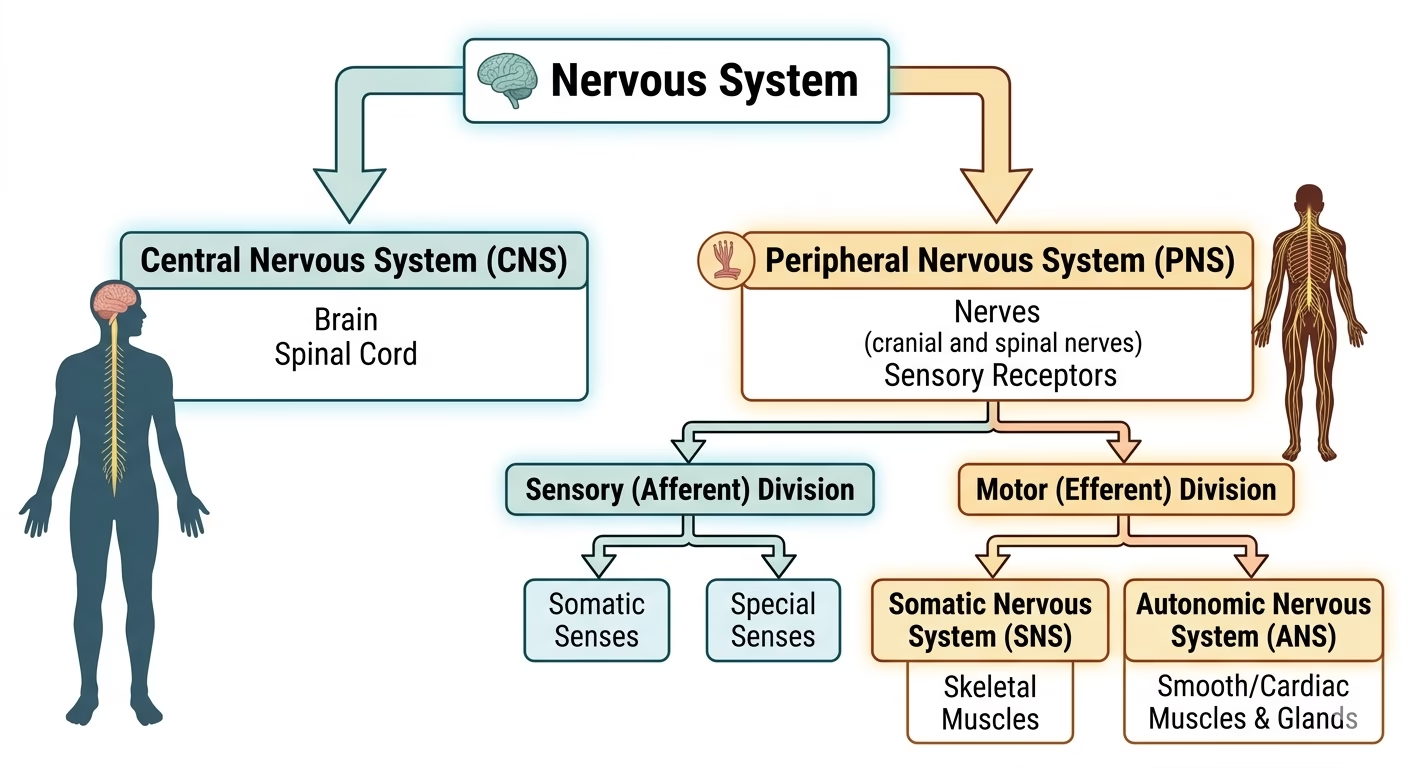
To understand how the nervous system operates, we must first look at its structural organization. It is broadly categorized into two main divisions: the Central Nervous System (CNS) and the Peripheral Nervous System (PNS).
The Central Nervous System (CNS)
The CNS is the “command center” of the body. It consists of two major organs:
The Brain: Housed within the protective skull, the brain contains billions of neurons. It is the seat of higher cognitive functions, including thoughts, emotions, and memories.
The Spinal Cord: Linked to the brain through the foramen magnum of the occipital bone and shielded by the vertebral column, the spinal cord acts as a vital relay station. It allows information to flow between the brain and the rest of the body.
The Peripheral Nervous System (PNS)
The PNS consists of all nervous tissue located outside the CNS. This includes cranial nerves (originating from the brain), spinal nerves (originating from the spinal cord), ganglia, and sensory receptors. The PNS serves as the communication line between the CNS and the body’s limbs and organ.
2. Functional Divisions of the Peripheral Nervous System
While the CNS is structurally unified, the PNS is functionally diverse. It is divided into two primary pathways:
The Sensory (Afferent) Division
The sensory division is the “input” side of the system. It uses specialized receptors to monitor changes in the internal and external environments.
Somatic Senses: These include tactile (touch), thermal (temperature), pain, and proprioceptive (body position) sensations.
Special Senses: These include smell, taste, vision, hearing, and equilibrium.
The Motor (Efferent) Division
The motor division is the “output” side. It carries signals from the CNS to effectors—muscles and glands—to trigger a response. This division is further split into two distinct systems:
Somatic Nervous System (SNS): This system controls the activity of skeletal muscles. It is responsible for voluntary movements and specialized involuntary movements known as reflexes.
Autonomic Nervous System (ANS): The ANS operates subconsciously, regulating smooth muscle, cardiac muscle, and glands.
3. The Autonomic Nervous System: Balance and Survival
The Autonomic Nervous System is essential for maintaining homeostasis. It is subdivided into two branches that often produce opposing effects:
Sympathetic Nervous System: Often called the “fight-or-flight” system. It prepares the body for emergencies or strenuous exercise by increasing heart rate and redirecting blood flow to muscles.
Parasympathetic Nervous System: Known as the “rest-and-digest” system. It conserves energy and manages routine bodily functions, such as slowing the heart rate and stimulating digestion.
The Enteric Nervous System (ENS)
Often referred to as the “second brain,” the ENS is a network of over 100 million neurons embedded in the walls of the gastrointestinal (GI) tract. While it communicates with the ANS, it can also function independently to regulate the movement and secretions of the digestive system.
4. The Building Blocks: Neurons and Glial Cells
Nervous tissue is composed of two primary types of cells, each playing a vital role in the system’s functionality.
Neurons: The Communicators
Neurons are excitable cells responsible for transmitting nerve impulses. These electrical signals allow for rapid communication over long distances.
Cell Body: Contains the nucleus and organelles.
Dendrites: Receive signals from other neurons.
Axon: A long projection that carries impulses away from the cell body toward another neuron or an effector organ.
Glial Cells: The Support Staff
Glial cells (or neuroglia) do not conduct electrical impulses but are indispensable. They provide structural support, nourishment, and protection for neurons, ensuring the extracellular environment remains stable for signal transmission.
5. How It Works: The Three Fundamental Functions
The nervous system operates through a continuous cycle of three main processes: Sensation, Integration, and Motor Output.
Sensation (Sensory Function)
Sensory receptors detect stimuli—such as the heat of a stove or the sound of a voice. These stimuli are converted into electrical signals called graded potentials, which travel through sensory neurons to the CNS.
Integration (Integrative Function)
Once the information reaches the CNS (specifically the brain), it is processed. The brain interprets the sensory input, compares it with stored memories, and decides on the appropriate response. This “decision-making” process is the core of human intelligence.
Motor Output (Motor Function)
After integration, the CNS generates a response. An action potential travels down motor neurons to the target effector. If the effector is a muscle, it contracts; if it is a gland, it secretes a hormone or enzyme.
6. From Sight to Action: A Real-World Example
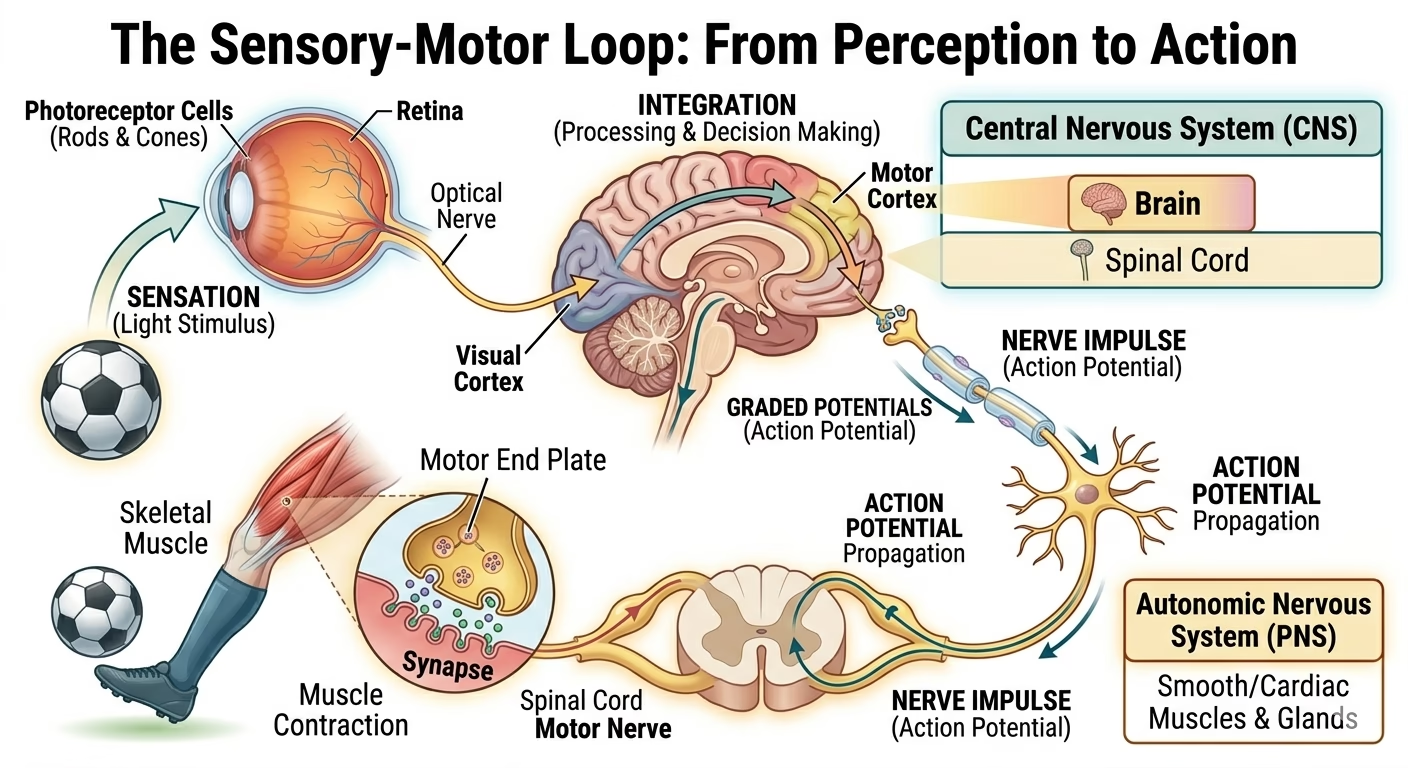
To see these functions in harmony, consider an athlete playing soccer.
Sensation: Light from the ball enters the eye and hits the photoreceptor cells (rods and cones) in the retina. These cells convert light into graded potentials.
Transmission: The signals travel via the optic nerve to the visual cortex in the brain’s occipital lobe.
Integration: The brain integrates this visual data with the athlete’s memory of the game’s rules and their physical position. The motor cortex in the frontal lobe then generates a signal to kick the ball.
Motor Output: The signal travels down the spinal cord to the motor neurons in the leg.
Response: Neurotransmitters are released at the synapse (the gap between neurons), triggering muscle contraction and resulting in a powerful kick.
7. The Chemistry of Communication: Neurotransmitters
Communication between neurons is not just electrical; it is also chemical. When an electrical action potential reaches the end of an axon, it cannot simply “jump” the gap to the next cell.
Instead, the neuron releases neurotransmitters. These chemical messengers cross the synapse and bind to receptors on the receiving cell. This binding triggers a new electrical signal in the next neuron, allowing the message to continue its journey. This elegant conversion from electrical to chemical and back to electrical is what makes the nervous system so flexible and precise.
8. Why Understanding the Nervous System Matters
Studying the nervous system is fundamental to medicine, psychology, and biology. Disorders of this system—ranging from Alzheimer’s and Parkinson’s to anxiety and spinal cord injuries—impact millions of lives. By understanding the healthy functioning of the CNS and PNS, researchers can develop better treatments and interventions.
Key Takeaways for Students
Structure: Know the difference between the CNS (Brain/Spinal Cord) and PNS (Nerves/Receptors).
Function: Remember the cycle: Sense – Integrate – Respond.
Balance: Understand how the Sympathetic and Parasympathetic systems work together to keep you alive.
Conclusion
The human nervous system is the ultimate interface between our inner selves and the outer world. It manages everything from our most complex philosophical thoughts to the simple act of breathing. By organizing itself into specialized divisions like the CNS, PNS, and the highly specialized ENS, it ensures that every part of the human body is monitored, protected, and controlled.
As we continue to map the billions of neurons in the brain, we gain a deeper appreciation for the “biological computer” that defines the human experience. Whether you are a student, a healthcare professional, or simply a curious reader, understanding the nervous system is the first step toward understanding what it truly means to be alive.
The Human Brain: A Complete Guide to Its Anatomy, Structure, and Functions
