Genetic screens are among the most important experimental tools in genetics, molecular biology, and functional genomics. They allow scientists to connect genes with observable traits, also called phenotypes. By altering genes and observing what changes in a cell, tissue, or organism, researchers can identify which genes control development, behavior, metabolism, disease resistance, drug response, and many other biological processes.
In simple terms, a genetic screen asks a direct experimental question: what happens when a gene is changed? The answer can reveal whether that gene is required for normal function, whether it interacts with other genes, or whether it contributes to disease. Genetic screens are used in many systems, including yeast, fruit flies, nematode worms, zebrafish, plants, mammalian cells, and human induced pluripotent stem cell-derived models. They have helped define cellular pathways, discover gene-drug interactions, and identify potential therapeutic targets for human disease. (JoVE)
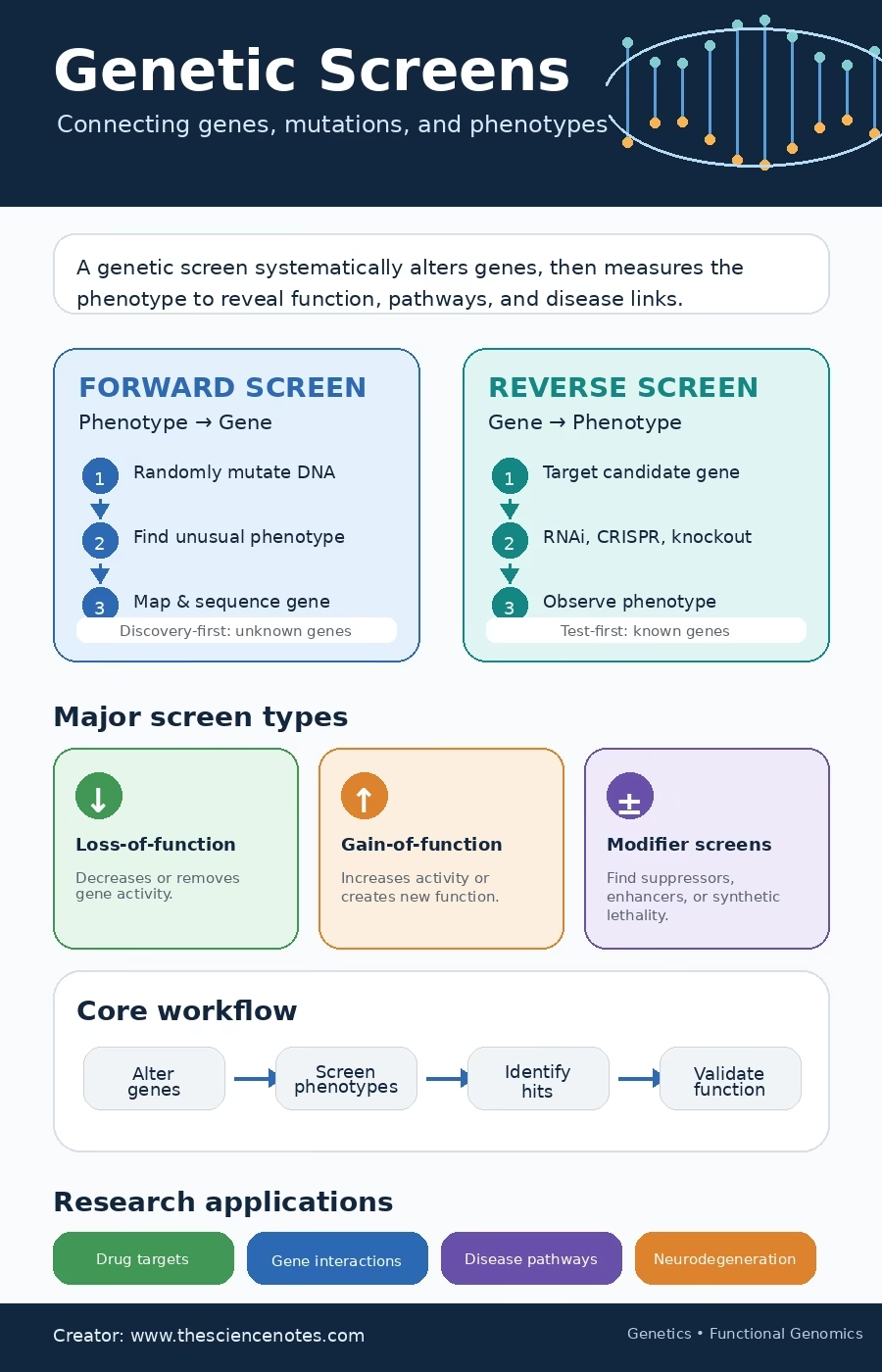
What Are Genetic Screens?
A genetic screen is a systematic experiment designed to identify genes or mutations associated with a phenotype of interest. A phenotype can be visible, such as body shape, eye color, growth rate, movement, or fertility. It can also be molecular or cellular, such as protein localization, gene expression, resistance to a drug, sensitivity to stress, or changes in neuronal structure.
Genetic screens typically begin by altering DNA or gene expression. Researchers then examine the resulting organisms or cells to find individuals with a relevant phenotype. Once a phenotype is detected, the responsible gene or mutation can be identified through mapping, sequencing, molecular barcoding, or modern next-generation sequencing methods.
Although genetic screening can sound similar to medical genetic testing, the two are different. In research, genetic screens are experimental tools used to discover gene function. In clinical contexts, genetic screening usually refers to testing people for inherited variants linked to disease risk. This article focuses on research genetic screens used to study biological mechanisms.
Forward Genetic Screens: From Phenotype to Gene
A forward genetic screen begins with a phenotype and works backward to identify the gene responsible. This approach is also called classical genetics.
In a typical forward screen, researchers randomly introduce mutations into the genome. These mutations may be generated using radiation, chemical mutagens, or insertional mutagenesis with mobile DNA elements such as transposons. After mutagenesis, the organisms or cells are screened for a phenotype of interest. Once a mutant with the desired phenotype is found, researchers identify the mutated gene through genetic mapping, sequencing, or molecular analysis. (JoVE)
For example, if researchers want to identify genes required for normal movement in Caenorhabditis elegans, they may mutagenize a population of worms and then look for animals with abnormal locomotion. The animals that move poorly may carry mutations in genes involved in muscle function, neuronal signaling, sensory processing, or developmental patterning.
The key advantage of a forward genetic screen is that it is unbiased. Researchers do not need to know which gene is involved before starting the experiment. This makes forward screening especially powerful for discovering unexpected genes in a biological pathway.
Common Features of Forward Screens
Forward genetic screens often include:
- Random mutation generation
Mutations are introduced across the genome. - Phenotype-based selection or observation
Mutants are identified because they display a visible, measurable, or molecular phenotype. - Gene identification
The mutation is mapped and sequenced to determine which gene was affected. - Validation
Follow-up experiments confirm that the identified mutation causes the phenotype.
Forward screens have historically been essential for identifying genes involved in embryonic development, cell division, neuronal signaling, metabolism, stress responses, and behavior.
Reverse Genetic Screens: From Gene to Phenotype
A reverse genetic screen starts with a known gene or set of candidate genes and asks what phenotype appears when those genes are disrupted. In other words, reverse genetics moves from gene to phenotype, rather than from phenotype to gene.
Reverse genetic screens became especially powerful after whole-genome sequencing made it possible to identify nearly all predicted genes in model organisms. Once the gene sequence is known, scientists can design targeted methods to reduce, delete, silence, or modify that gene and then observe the outcome.
Common reverse-screening methods include:
- RNA interference, or RNAi, which reduces gene expression.
- Targeted gene deletion, which removes or disrupts a gene.
- CRISPR-Cas9 knockout, which creates targeted DNA breaks that often disable genes.
- CRISPR interference, or CRISPRi, which represses transcription without cutting DNA.
- CRISPR activation, or CRISPRa, which increases transcription of target genes.
- Overexpression libraries, where genes are introduced into cells at high levels.
In C. elegans, RNAi feeding has been widely used for reverse genetic screens. In this method, worms consume bacteria engineered to produce double-stranded RNA corresponding to a target gene. The RNA triggers gene knockdown in the worm, allowing researchers to observe the effect of reduced gene activity. WormBook describes RNAi by feeding as relatively inexpensive, scalable, and suitable for high-throughput screening, although it can produce more variable results than injection or soaking methods. (NCBI)
Loss-of-Function and Gain-of-Function Screens
Genetic screens can be classified not only as forward or reverse, but also by the type of genetic effect being studied.
Loss-of-Function Screens
A loss-of-function mutation reduces or eliminates the activity of a gene. This type of mutation is useful when researchers want to determine whether a gene is required for a process.
For example, if disabling a gene causes worms to stop moving normally, that gene may be necessary for muscle contraction, nervous system function, or coordination. If knocking down a gene causes cancer cells to die, that gene may represent a cancer dependency and a possible therapeutic target.
Loss-of-function screens are common in:
- Developmental biology
- Cancer biology
- Drug-target discovery
- Neurobiology
- Metabolism research
- Host-pathogen interaction studies
CRISPR knockout screens are now a major loss-of-function approach in mammalian cells. Pooled CRISPR libraries can deliver thousands of guide RNAs into a population of cells, with each guide RNA targeting a specific gene. Researchers then apply a selection pressure, such as a drug or environmental stress, and use sequencing to identify which gene disruptions changed cell survival or behavior. Addgene describes pooled CRISPR libraries as tools that can target all genes in a genome or a defined subset of genes in one experiment. (Addgene)
Gain-of-Function Screens
A gain-of-function mutation increases gene activity, creates a new gene function, or causes a gene to be active in the wrong place or at the wrong time. These screens are useful when researchers want to discover genes that can drive a phenotype when overactive.
Gain-of-function screens may use:
- Random insertion of regulatory elements that activate nearby genes.
- Overexpression plasmid libraries.
- CRISPR activation systems that increase expression of endogenous genes.
- Mutant gene libraries designed to create hyperactive proteins.
Gain-of-function screens are particularly useful for identifying genes that promote cell proliferation, drug resistance, altered signaling, or changes in cell identity.
Modifier Screens: Suppressors, Enhancers, and Synthetic Lethality
Not all genetic screens begin with a normal organism or cell. Some begin with a known mutant and ask which additional mutations make the phenotype better or worse. These are called modifier screens.
Suppressor Screens
A suppressor screen starts with an existing mutant phenotype and searches for second-site mutations that reduce the severity of that phenotype. For example, if a mutation causes abnormal movement, a suppressor mutation may partially restore normal movement.
Suppressor mutations can be:
- Intragenic, meaning the second mutation occurs in the same gene as the original mutation.
- Extragenic, meaning the second mutation occurs in a different gene.
Suppressor screens can reveal genes in the same pathway, compensatory mechanisms, and molecular interactions that would not be obvious from a single mutation alone.
Enhancer Screens
An enhancer screen identifies mutations that make an existing phenotype more severe. These screens are useful for finding genes that work in parallel or partially redundant pathways.
For example, if mutation A causes a mild phenotype and mutation B alone also causes a mild phenotype, but the double mutant is severely impaired, the two genes may participate in related or compensatory pathways.
Synthetic Sickness and Synthetic Lethality
When two mutations together cause poor growth, the result is called synthetic sickness. When two mutations together cause cell death or organismal death, the result is called synthetic lethality.
Synthetic lethality has become especially important in cancer research. The principle is that cancer cells may carry one genetic defect that normal cells do not. If researchers identify a second gene that becomes essential only in the cancer-specific genetic context, that second gene may be a selective drug target. Recent reviews describe synthetic lethality as a major precision-oncology strategy, especially for identifying vulnerabilities in cancers with defects in DNA repair, metabolic regulation, or redundant survival pathways. (Nature)
Genetic Screens in C. elegans: Why Worms Are Useful
The nematode worm Caenorhabditis elegans is a classic model organism for genetic screens. It is small, transparent, easy to grow in large numbers, and has a short life cycle. These properties make it practical to screen many animals for visible phenotypes such as movement defects, developmental abnormalities, fertility changes, lifespan changes, and altered behavior.
Forward Screens in Worms
In a general forward screen, a population of worms is exposed to a mutagen under controlled laboratory conditions. One widely used chemical mutagen is ethyl methanesulfonate, or EMS, which introduces point mutations by chemically modifying DNA bases. Because EMS is hazardous, it must be handled only under approved institutional safety procedures, using appropriate protective equipment and chemical-waste protocols. Worm mutagenesis protocols emphasize fume-hood work and chemical inactivation procedures for EMS-contaminated materials. (NCBI)
After mutagenesis, worms are allowed to reproduce. Researchers then examine later generations for phenotypes of interest. This is important because recessive mutations may not be visible in the first generation but can appear when offspring inherit two mutant copies.
A forward screen in worms might identify genes required for:
- Movement
- Feeding
- Egg laying
- Embryonic development
- Nervous system function
- Stress resistance
- Lifespan regulation
Reverse Screens in Worms
Reverse genetic screens in C. elegans often use RNAi feeding libraries. Each bacterial strain in the library produces double-stranded RNA against a specific worm gene. Worms are placed on bacterial lawns, feed on the bacteria, and experience reduced expression of the target gene.
The Ahringer RNAi feeding library is one of the best-known C. elegans resources. WormBook notes that major RNAi feeding libraries have enabled gene-function studies at both single-gene and global scales, and that the Ahringer and Vidal libraries together can target a large majority of C. elegans genes. (NCBI)
Reverse screens are particularly useful when researchers already have a list of candidate genes, such as genes expressed in neurons, genes predicted to regulate metabolism, or genes related to human disease pathways.
Genetic Screens in Yeast, Cells, and Other Model Systems
Although worms are a powerful model, genetic screens are not limited to C. elegans. Yeast has been one of the most productive organisms for genome-wide screens. The yeast deletion collection contains systematic gene-deletion strains that allow researchers to test how individual genes contribute to growth under many conditions. A landmark Nature study reported a near-complete yeast gene-deletion collection covering 96% of annotated open reading frames and used molecular barcodes to quantify strain fitness in parallel. (Nature)
Mammalian cell culture screens are also central to modern genetics. These screens often use RNAi, CRISPR knockout, CRISPRi, CRISPRa, base editing, or overexpression systems. The Broad Institute’s Genetic Perturbation Platform highlights large-scale perturbation technologies including CRISPR-Cas9, CRISPR-Cas12a, CRISPRi, CRISPRa, base editing, prime editing, open reading frame overexpression, and RNA interference. (Broad Institute)
Modern CRISPR Genetic Screens
CRISPR technology has transformed genetic screening because it allows researchers to target genes with high programmability and genome-wide scale. In a pooled CRISPR screen, thousands of guide RNAs are introduced into a cell population. Each cell usually receives one or a small number of guide RNAs. After selection or phenotypic sorting, sequencing reveals which guide RNAs became enriched or depleted.
CRISPR screens can be designed for different purposes:
- Knockout screens disable genes.
- CRISPRi screens reduce gene expression without cutting DNA.
- CRISPRa screens increase gene expression.
- Base-editor screens introduce targeted nucleotide changes.
- Prime-editor screens test more precise DNA edits.
- Reporter screens identify genes affecting a fluorescent or molecular readout.
- Drug-resistance screens find genes that alter sensitivity to compounds.
A widely cited Nature Protocols article describes genome-scale CRISPR-Cas9 knockout and transcriptional activation screens as tools for unbiased discovery and functional characterization of genetic elements associated with phenotypes. (Nature)
Applications of Genetic Screens
1. Discovering Gene Function
The most basic use of a genetic screen is to determine what a gene does. If disrupting a gene causes a specific phenotype, researchers can infer that the gene contributes to the biological process behind that phenotype.
2. Mapping Biological Pathways
Screens can reveal groups of genes that work together. If several mutations produce similar phenotypes, those genes may belong to the same pathway. Modifier screens can also show whether genes act upstream, downstream, or in parallel.
3. Studying Gene-Drug Interactions
Genetic screens can identify which mutations make cells more sensitive or resistant to a drug. This is valuable for understanding drug mechanism of action, predicting resistance, and identifying combination therapies. Yeast chemical-genetic profiling has been used to link bioactive compounds to cellular target pathways by measuring drug hypersensitivity in deletion mutants. (Nature)
4. Identifying Cancer Vulnerabilities
Cancer cells often depend on altered pathways for survival. Genetic screens can identify genes that are essential in cancer cells but less important in normal cells. Synthetic-lethal screens are especially important here because they search for vulnerabilities created by cancer-specific mutations. (Nature)
5. Understanding Neurodegenerative Disease
Genetic screens are increasingly used in neuroscience and neurodegeneration research. CRISPR and RNAi screens can be performed in neurons, neural stem cells, microglia, and induced pluripotent stem cell-derived models. These approaches help researchers identify genes that influence neuronal survival, neurite growth, protein aggregation, inflammation, and disease-associated cell states.
For example, CRISPR-based functional genomics has been applied to iPSC-derived neurons to study survival, morphology, and disease-relevant phenotypes. A recent Cell article reported CRISPR screens in human iPSC-derived neurons that identified modifiers of tau oligomer accumulation, a process relevant to tauopathies such as Alzheimer’s disease and frontotemporal dementia. (PMC)
A 2024 Nature study also used CRISPR-Cas9 screens to investigate aging in neural stem cells, identifying gene knockouts that improved activation of old neural stem cells in mouse models. The study found regulators linked to cilium organization and glucose import, including Slc2a4, which encodes the GLUT4 glucose transporter. (Nature)
Advantages of Genetic Screens
Genetic screens are powerful because they are systematic, scalable, and often unbiased. They can reveal genes that would not have been selected based on prior knowledge. They also allow researchers to move from phenotype to mechanism, which is essential for understanding complex biology.
Key advantages include:
- Ability to discover unknown genes in a pathway.
- Compatibility with whole-genome approaches.
- Use across many organisms and cell types.
- Relevance to disease modeling and drug discovery.
- Capacity to uncover genetic interactions.
Limitations of Genetic Screens
Despite their power, genetic screens have limitations. Not every mutation produces an easily detectable phenotype. Some genes are redundant, meaning another gene can compensate when one is disrupted. Essential genes may cause lethality before a later phenotype can be studied. RNAi can produce incomplete knockdown or off-target effects. CRISPR screens can be affected by guide RNA efficiency, DNA repair outcomes, copy-number effects, and cell-type-specific biology.
Therefore, hits from genetic screens require validation. Researchers usually confirm candidate genes with independent guide RNAs, rescue experiments, sequencing, protein-level analysis, secondary assays, and testing in additional models.
Conclusion
Genetic screens are foundational tools for modern biology. Forward screens begin with a phenotype and identify the responsible gene, while reverse screens begin with a gene and determine its function through targeted disruption or altered expression. Loss-of-function, gain-of-function, suppressor, enhancer, and synthetic-lethal screens each answer different biological questions.
From classical mutagenesis in nematode worms to genome-wide CRISPR screens in human cells, genetic screening has become central to functional genomics. These methods help scientists define gene function, map pathways, study disease mechanisms, identify drug targets, and understand how genes interact in living systems.
As CRISPR, single-cell sequencing, high-content imaging, and computational analysis continue to improve, genetic screens will become even more precise and informative. Their core purpose, however, remains the same: to reveal how genes create biological function.
FAQ: Genetic Screens
What is a genetic screen?
A genetic screen is an experiment that identifies genes or mutations associated with a specific phenotype. Researchers alter genes and then look for changes in cells or organisms.
What is the difference between forward and reverse genetic screens?
A forward genetic screen starts with a phenotype and identifies the gene responsible. A reverse genetic screen starts with a known gene and tests what phenotype appears when that gene is disrupted or altered.
What is a loss-of-function screen?
A loss-of-function screen reduces or eliminates gene activity to determine whether a gene is required for a biological process.
What is a gain-of-function screen?
A gain-of-function screen increases gene activity or introduces active gene variants to identify genes that can drive a phenotype.
Why is C. elegans used in genetic screens?
C. elegans is small, transparent, easy to grow, genetically tractable, and produces many offspring quickly, making it useful for large-scale phenotype-based screens.
How are CRISPR screens used today?
CRISPR screens are used to knock out, repress, activate, or edit genes across the genome. They are widely used in cancer biology, neuroscience, drug discovery, infectious disease research, and functional genomics.

