Dengue fever is a mosquito-borne viral infection that has seen a dramatic rise in global cases over the last decade. Often called “breakbone fever” because of the debilitating bone and joint pain it causes, dengue is now a year-round threat in over 100 countries. Whether you are a resident in an endemic zone or an international traveler, knowing the early warning signs can be life-saving.
What Causes Dengue Fever?
Dengue is caused by any one of four closely related dengue viruses (DENV 1-4). It is transmitted to humans primarily through the bite of an infected Aedes aegypti or Aedes albopictus mosquito.
These mosquitoes are highly adapted to urban environments. Unlike other species that breed in swamps, Aedes mosquitoes prefer man-made containers and are “day-biters,” meaning they are most active during daylight hours, specifically early morning and late afternoon.
Common Dengue Symptoms: How to Identify the Infection
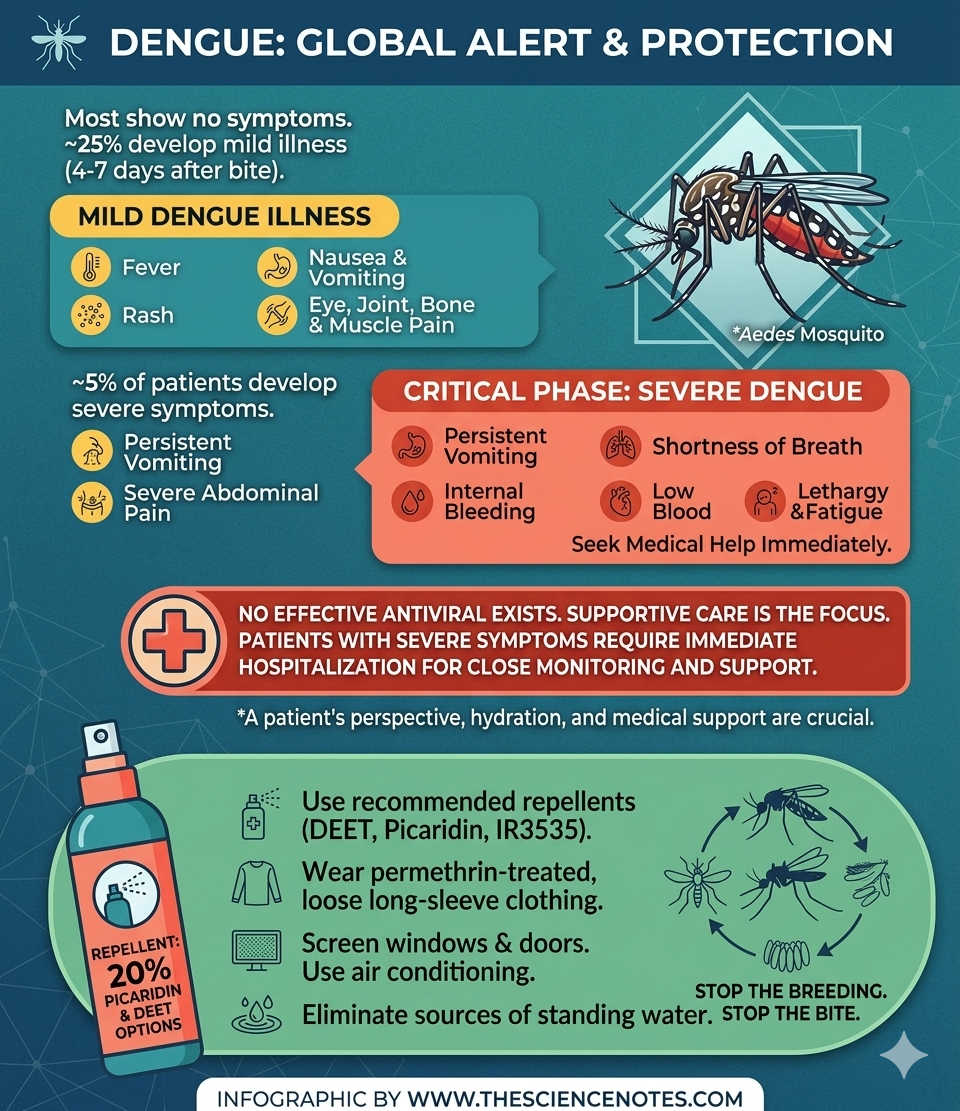
Most people infected with the dengue virus remain asymptomatic. However, for those who do get sick, symptoms typically appear 4 to 7 days after the mosquito bite.
Early Warning Signs
The most common symptom is a sudden high fever (often reaching 104°F/40°C), accompanied by at least two of the following:
Severe Headache: Specifically a deep, throbbing pain behind the eyes.
Joint and Muscle Pain: Intense “breakbone” sensations in the knees, elbows, and back.
Nausea and Vomiting: Persistent upset stomach.
Dengue Rash: A patchy red rash that usually appears 2–5 days after the fever begins.
Swollen Glands: General inflammation of the lymph nodes.
When Does Dengue Become Dangerous? (Severe Dengue)
About 1 in 20 people who get sick will develop Severe Dengue (formerly known as Dengue Hemorrhagic Fever). This is a medical emergency that can lead to internal bleeding, organ failure, and shock.
The “Critical Phase”
Interestingly, the warning signs of severe dengue usually appear in the 24 to 48 hours after the fever goes away. If your temperature drops but you feel significantly worse, watch for these emergency indicators:
Severe abdominal pain or tenderness.
Persistent vomiting (at least 3 times in 24 hours).
Bleeding from the nose or gums.
Vomiting blood or blood in the stool.
Feeling extremely tired, restless, or irritable.
Rapid or difficult breathing.
If you notice any of these signs, seek emergency medical care immediately.
Who is Most at Risk?
While anyone can catch the virus, certain factors increase the likelihood of a severe reaction:
Previous Infection: If you have had dengue before, your risk of severe complications increases significantly if you are infected with a different strain of the virus.
Pregnancy: Pregnant individuals are at higher risk for severe disease and can pass the virus to their fetus.
Geography: People living in or traveling to Southeast Asia, Latin America, and the Pacific Islands are at the highest risk.
How is Dengue Diagnosed and Treated?
Diagnosis
Doctors use a blood test to confirm the presence of the virus. A PCR (Polymerase Chain Reaction) test can detect the virus in the first 5 days, while antibody tests are used after the first week of symptoms.
Treatment and Home Care
There is no specific antiviral medicine to treat dengue fever. Management focuses on relieving symptoms:
Hydration: Drink plenty of water and oral rehydration salts (electrolytes) to prevent dehydration.
Fever Control: Use Acetaminophen (Tylenol/Paracetamol).
CRITICAL SAFETY WARNING: Do NOT take Aspirin, Ibuprofen (Advil/Motrin), or Naproxen (Aleve). These are blood thinners that can increase the risk of internal bleeding when you have dengue.
Prevention: How to Protect Yourself from Mosquitoes
The best way to prevent dengue is to avoid mosquito bites and reduce the mosquito population around your home.
1. Personal Protection Tips
Apply Repellent: Use EPA-registered insect repellents containing DEET, Picaridin, or IR3535.
Wear Protective Clothing: When outdoors, wear long-sleeved shirts, long pants, and socks.
Treat Gear: Use 0.5% Permethrin to treat clothing and camping gear.
Secure Your Environment: Ensure window and door screens are intact. If you are in a high-risk area without air conditioning, sleep under a mosquito net.
2. Eliminating Breeding Sites
Dengue mosquitoes breed in stagnant water. Even a bottle cap full of water is enough for them to lay eggs. Once a week, follow the “Tip ‘n Toss” rule:
Empty and scrub flowerpot saucers, birdbaths, and pet bowls.
Keep gutters clear of leaves and debris.
Cover rain barrels with fine mesh screens.
Properly discard old tires or containers that can hold rainwater.
Is There a Dengue Vaccine?
Yes, but it is not for everyone. The Dengvaxia vaccine is approved for children aged 9–16 who live in areas where dengue is common (such as Puerto Rico or American Samoa).
Crucial Limitation: The vaccine is only for those who have already had a lab-confirmed case of dengue in the past. If a person who has never had dengue gets the vaccine, it may actually increase their risk of severe illness if they are bitten by an infected mosquito later.
Final Thoughts for Travelers and Residents
As global travel returns to pre-pandemic levels and urban temperatures rise, dengue is no longer a “faraway” problem. It is a manageable but serious condition. By staying hydrated, using the right pain relief, and being aggressive about mosquito prevention, you can significantly reduce your risk.
