Qualitative protein analysis helps determine whether a sample contains specific protein-related chemical features. One of the classic laboratory methods for this purpose is the xanthoproteic test, also called the xanthoproteic acid test or nitric acid protein test. This test uses concentrated nitric acid, heat, and often a strong alkali to detect aromatic amino acids in proteins or free amino acid samples.
The xanthoproteic test is widely discussed in biochemistry teaching labs because it is relatively simple, visually clear, and useful for identifying amino acids with aromatic structures, especially tyrosine and tryptophan. It is not a quantitative protein assay, meaning it can help show whether certain amino acid structures are present, but it cannot accurately measure how much protein or amino acid is in the sample.
What Is the Xanthoproteic Test?
The xanthoproteic test is a qualitative biochemical test used to detect proteins or amino acids that contain aromatic rings. The name comes from the yellow color that appears when aromatic amino acids react with nitric acid. In many protocols, the yellow color becomes deeper yellow or orange after the addition of a strong base such as sodium hydroxide or ammonia.
A positive xanthoproteic test usually indicates the presence of aromatic amino acids, particularly tyrosine and tryptophan. Phenylalanine also contains an aromatic ring, but it often gives a weak or delayed response because its benzene ring is less reactive under typical test conditions.
Principle of the Xanthoproteic Test
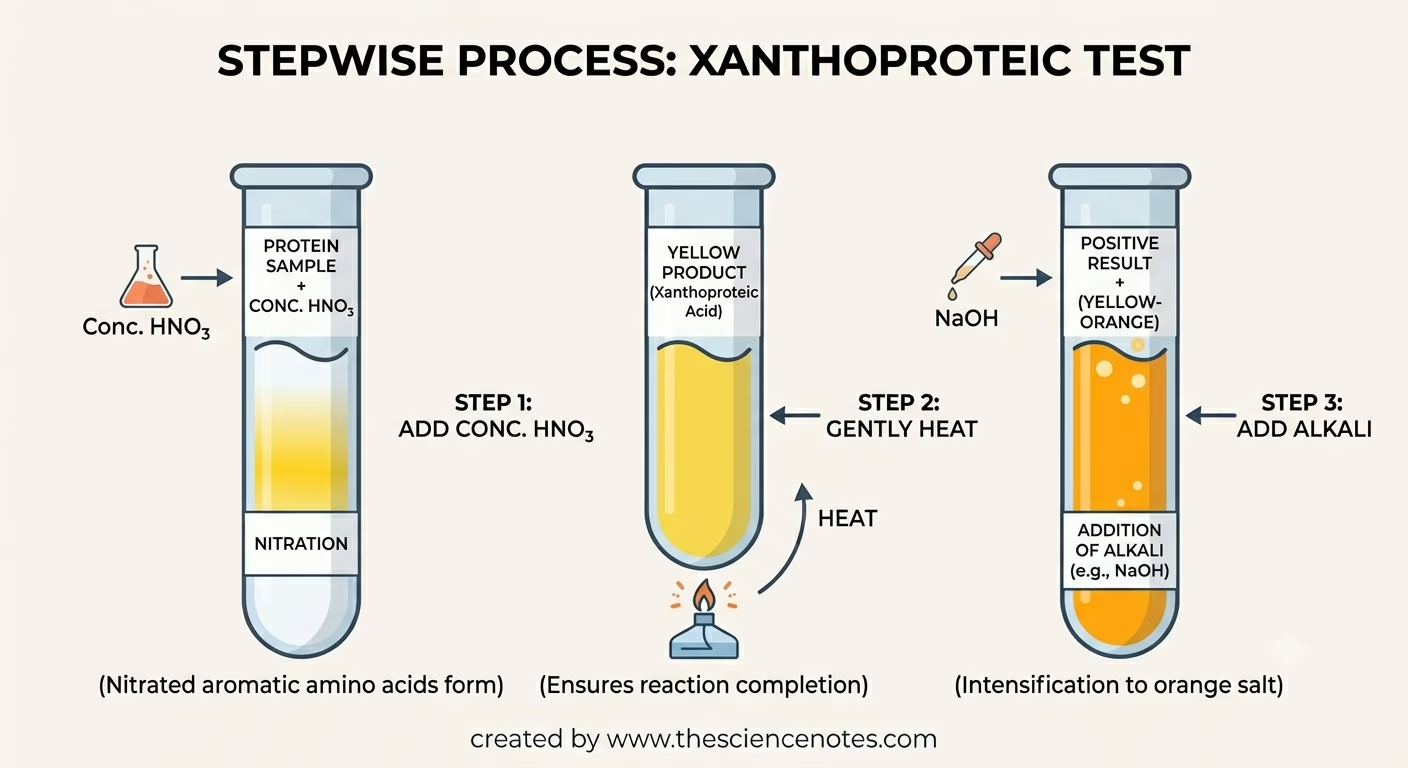
The xanthoproteic test is based on nitration. When a protein or amino acid sample containing an aromatic ring is treated with concentrated nitric acid and heat, the aromatic ring can undergo nitration, producing a yellow nitro derivative. When alkali is added afterward, the color often shifts from yellow to orange due to salt formation or intensified color development.
This visible color change makes the test useful as a screening method. However, because it relies on color observation, it should be interpreted carefully, especially when samples are naturally colored or contain interfering substances.
Why Nitric Acid Is Used in Qualitative Protein Analysis
Nitric acid is central to the xanthoproteic test because it supplies the nitrating conditions needed to modify aromatic amino acid residues. Under heat, nitric acid reacts with aromatic rings in amino acids such as tyrosine and tryptophan, producing a yellow-colored product. A strong base may then be added to intensify the color to orange.
This makes nitric acid especially useful in qualitative protein analysis when the goal is not to quantify total protein, but to detect the presence of aromatic amino acid residues within a protein sample.
Reagents and Materials Commonly Used
A typical xanthoproteic test setup may include:
- Protein solution, amino acid solution, egg albumin, or another sample
- Concentrated nitric acid
- Sodium hydroxide or ammonia solution
- Test tubes
- Pipettes or droppers
- Water bath or controlled heat source
- Test tube rack
- Appropriate laboratory PPE and ventilation
Microbe Notes lists concentrated nitric acid, sodium hydroxide, test solution, test tubes, pipettes, and a test tube stand among the common requirements for the xanthoproteic test. Lab Alley also describes the method as using nitric acid, heat, and optionally a strong base to create the colorimetric change.
General Xanthoproteic Test Procedure
The procedure may vary depending on the teaching lab or institutional protocol, but the general workflow is as follows:
- Place a small amount of protein or amino acid sample into a clean test tube.
- Add concentrated nitric acid carefully under proper laboratory conditions.
- Heat the mixture according to the approved lab protocol.
- Allow the tube to cool.
- Add sodium hydroxide or ammonia if the protocol includes an alkali step.
- Observe the color change.
A positive test produces a yellow color after nitric acid treatment, which may deepen to orange after alkali is added. Some protein samples may also form a white precipitate because of protein denaturation, but the yellow-to-orange color change is the key observation for the xanthoproteic reaction.
Safety note: This test involves concentrated nitric acid and strong alkali. It should be performed only in a properly equipped laboratory using institutional safety procedures, PPE, ventilation, and approved waste-disposal methods.
Xanthoproteic Test Results and Interpretation
| Observation | Interpretation |
|---|---|
| Yellow color after nitric acid treatment | Positive indication of aromatic amino acids |
| Orange color after alkali addition | Stronger positive result |
| No yellow or orange color | Negative result |
| White precipitate only | Possible protein denaturation; not by itself the main positive result |
A positive xanthoproteic test indicates the presence of aromatic amino acid residues in the sample. A negative result suggests that these aromatic groups are absent or present at levels or in forms that do not produce a visible reaction under the test conditions.
A student lab example on CliffsNotes reports orange color development for tryptophan and an unknown amino acid solution, interpreting both as positive for aromatic amino acids. This type of observation is consistent with the expected color-based interpretation, although teaching-note examples should be treated as supplementary rather than primary protocol sources.
Which Amino Acids Give a Positive Xanthoproteic Test?
The xanthoproteic test is most useful for detecting amino acids with aromatic groups, especially:
- Tyrosine
- Tryptophan
- Phenylalanine, although its response is often weak or delayed
Tyrosine and tryptophan generally respond more readily because their aromatic systems are more reactive under xanthoproteic test conditions. Phenylalanine may not show a strong positive result in standard conditions even though it contains an aromatic ring.
Applications of the Xanthoproteic Test
The xanthoproteic test is commonly used in educational and basic biochemical analysis settings. Its main applications include:
- Detecting aromatic amino acids in protein samples
- Demonstrating nitration reactions in biochemistry labs
- Differentiating aromatic amino acids from non-aromatic amino acids
- Screening protein-containing samples qualitatively
- Supporting classroom experiments using samples such as egg albumin
Lab Alley notes that qualitative protein assays are useful in food, agricultural, clinical, and diagnostic contexts, while the xanthoproteic test itself is useful because it is simple, fast, and does not require specialized equipment.
Limitations of the Xanthoproteic Test
Although the xanthoproteic test is useful, it has several limitations:
- It is qualitative, not quantitative.
- It does not measure total protein concentration.
- It is most responsive to aromatic amino acids, especially tyrosine and tryptophan.
- Phenylalanine may produce a weak or negative result under normal test conditions.
- Color interpretation can be subjective.
- Naturally colored samples may interfere with visual interpretation.
- The test requires hazardous reagents, including concentrated nitric acid.
Because of these limitations, the xanthoproteic test is best used as a screening or teaching-lab assay rather than a stand-alone method for precise protein quantification.
Xanthoproteic Test vs. Xanthochromia: Do Not Confuse the Terms
The xanthoproteic test should not be confused with xanthochromia. Both terms involve the idea of yellow coloration, but they refer to different laboratory contexts.
The xanthoproteic test is a biochemical test for aromatic amino acids and proteins. Xanthochromia, by contrast, is a clinical laboratory term referring to yellowish discoloration of cerebrospinal fluid, commonly attributed to bilirubin and red blood cell breakdown products.
This distinction matters because “xantho” means yellow, but the chemical and clinical meanings are not interchangeable.
Conclusion
The xanthoproteic test is a classic qualitative protein analysis method that uses nitric acid to detect aromatic amino acids in proteins or amino acid samples. A yellow color after nitric acid treatment, often deepening to orange after alkali addition, indicates a positive result. The test is especially useful for detecting tyrosine and tryptophan, while phenylalanine may give a weaker response.
Although simple and visually clear, the xanthoproteic test should be understood as a qualitative screening method rather than a precise measurement technique. For educational labs, introductory biochemistry, and basic protein identification, it remains a useful demonstration of how chemical structure affects observable laboratory results.
FAQ
What is the xanthoproteic test used for?
The xanthoproteic test is used to detect aromatic amino acids in proteins or amino acid samples. It is mainly associated with tyrosine and tryptophan detection.
Why does the xanthoproteic test turn yellow?
The test turns yellow because nitric acid nitrates aromatic rings in certain amino acids, producing yellow nitro derivatives. The color may become orange after alkali is added.
Is the xanthoproteic test quantitative?
No. The xanthoproteic test is qualitative. It can indicate whether certain aromatic amino acid residues are present, but it does not measure their exact concentration.
Which amino acids give a positive xanthoproteic test?
Tyrosine and tryptophan commonly give positive results. Phenylalanine contains an aromatic ring but often gives a weak or delayed response under ordinary test conditions.
Is xanthoproteic test the same as xanthochromia?
No. The xanthoproteic test is a biochemical protein/amino acid test, while xanthochromia refers to yellow discoloration of cerebrospinal fluid, often associated with bilirubin.
