Skip to content

THE SCIENCE NOTES

Complex Science, Simplified.

  • Diseases Guide
  • Cell and Molecular Biology
  • Anatomy and Physiology
  • Immunology
  • Protocols and Techniques
  • Food Science
  • Microbiology
  • Biotechnology
  • Biochemistry
  • Bacteriology
  • Cancer
  • Biology
  • News & Blogs
  • Contact Us
  • Privacy Policy
THE SCIENCE NOTES
  • Diseases Guide
  • Cell and Molecular Biology
  • Anatomy and Physiology
  • Immunology
  • Protocols and Techniques
  • Food Science
  • Microbiology
  • Biotechnology
  • Biochemistry
  • Bacteriology
  • Cancer
  • Biology
  • News & Blogs
  • Contact Us
  • Privacy Policy

Author: Binod G C, PhD

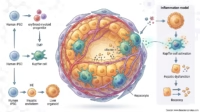
Detailed biomedical illustration of human iPSC-derived liver organoids containing Kupffer cells, hepatic endoderm, endothelial cells, and mesenchymal cells for liver inflammation modeling.
Posted on May 1, 2026 Cell and Molecular Biology

Human iPSC-Derived Liver Organoids with Kupffer Cells: Protocol Overview, Research Value, and Applications

Human iPSC-derived liver organoids containing Kupffer cells provide a more advanced in vitro model for studying liver inflammation, immune-cell integration, hepatic dysfunction, and tissue repair. Read more

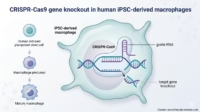
Illustration of CRISPR-Cas9 gene knockout in a human iPSC-derived macrophage, showing guide RNA targeting DNA inside the immune cell.
Posted on May 1, 2026 Cell and Molecular Biology

CRISPR Knockout in iPSC-Derived Macrophages: Optimized Workflow, Benefits, and Research Applications

Human iPSC-derived macrophages offer a scalable model for studying innate immunity, inflammation, and disease biology. This article explains how optimized CRISPR-Cas9 knockout workflows improve functional genomics research in these specialized immune cells. Read more

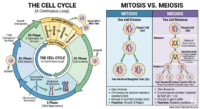
A comprehensive scientific diagram illustrating the eukaryotic cell cycle and a direct comparison between mitosis and meiosis. The left panel shows a continuous loop of interphase (G1, S, G2 phases) leading to the M phase (mitosis). The right panel provides a side-by-side analysis of mitosis versus meiosis, detailing parent cell (2n) division, chromosome count changes, occurrence in somatic or germ cells, and function
Posted on April 10, 2026April 10, 2026 Cell and Molecular Biology

Cell Division: Foundations, Mechanisms, and Modern Research

Explore the essential process of cell division. Learn about the history of cell theory, the mechanics of mitosis and meiosis, and how modern tools like flow cytometry are advancing cancer research. Read more

Recent Posts

  • Human iPSC-Derived Liver Organoids with Kupffer Cells: Protocol Overview, Research Value, and Applications
  • CRISPR Knockout in iPSC-Derived Macrophages: Optimized Workflow, Benefits, and Research Applications
  • Cryo-Electron Microscopy (Cryo-EM): Principle, Techniques, and Steps
  • Peanut Allergy Prevention: Early Introduction & Lasting Protection
  • Human Nervous System: Divisions, Functions & Anatomy Guide

🔥 Trending Now

  • 01 M1 and M2 Macrophage Polarization Protocol
  • 02 Health Impacts of Microplastics: A Complete Guide
  • 03 Entamoeba histolytica: Lifecycle and Diagnosis
Advertisement
May 2026
SMTWTFS
 12
3456789
10111213141516
17181920212223
24252627282930
31 
« Apr    
Advertisement

Two things are infinite: the universe and human stupidity; and I'm not sure about the universe. - Albert Einstein

© 2026 THE SCIENCE NOTES / Powered by WordPress / Theme by Design Lab